Interactive Learning in Congenital Heart Disease and Pulmonary Hypertension

Interactive learning modules for congenital heart disease with lesion-specific diagrams, pulmonary hypertension physiology, and clinical pearls designed for trainees.

Dr. Corey Chartan

Chief of Pulmonary Hypertension

Medical Director, Dell Children's Center for Pulmonary Hypertension

Dell Children's Medical Center

Associate Professor of Pediatrics

Dell Medical School, The University of Texas at Austin

Austin, Texas

corey.chartan@austin.utexas.edu

Disclaimer: This website is for educational purposes only and is not intended to provide medical advice, diagnosis, or treatment. All clinical decisions should be made by qualified healthcare professionals based on individual patient circumstances and institutional standards.

Pre/Post Learning Assessment

Complete the pre-test before using the learning modules, then take the post-test after to measure your knowledge improvement.

Participant Information

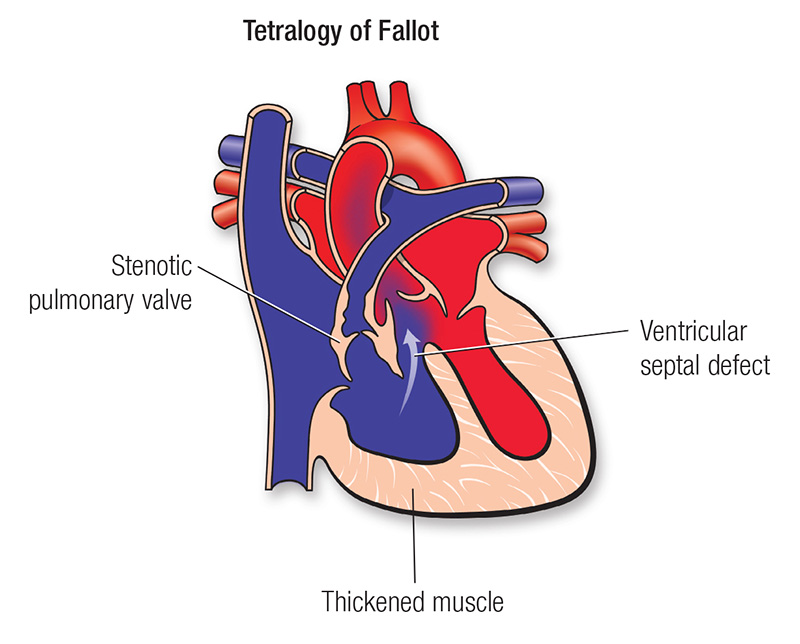
Tetralogy of Fallot

Conotruncal lesion

Baseline
PH
Tetralogy of Fallot cardiac catheterization diagram
Atrial involvementVentricular involvementGreat vesselsShunt present
Lesion library
Teaching controls
Show labels
Guide lines
Physiology overlay
Overlay highlight tint
The degree of RVOT obstruction determines how much blood reaches the lungs and whether flow across the VSD is predominantly left-to-right, bidirectional, or right-to-left.
Teaching summary
Lesion overview

Tetralogy of Fallot combines a large VSD with variable right ventricular outflow tract obstruction, producing physiology that ranges from pink TOF to severe cyanosis.

Difficulty level
Intermediate
Key teaching pearls
The VSD is usually large and nonrestrictive.
Cyanosis is driven more by RVOT obstruction than by the VSD itself.
Infundibular spasm can abruptly worsen right-to-left shunting.
Pulmonary hypertension teaching
PH risk overlay

Classic TOF usually has low PH risk before repair

How PH fits into this lesion

Classic TOF does not usually produce pulmonary arterial hypertension because pulmonary blood flow is often reduced by RVOT obstruction. However, PH can enter the differential after repair, with major aortopulmonary collaterals, absent pulmonary valve physiology, or distal pulmonary vascular disease.

Why PH develops (physiologic reasoning)

Classic TOF is actually protective against PH because RVOT obstruction limits pulmonary blood flow - the opposite of left-to-right shunt lesions. PH in TOF occurs through different mechanisms: (1) Major aortopulmonary collaterals (MAPCAs) can deliver unprotected systemic pressure to lung segments, causing segmental PVD; (2) Absent pulmonary valve syndrome causes massive PR with volume overload; (3) Post-repair PH may reflect residual branch PA stenosis, lung parenchymal disease, or true PVD from MAPCAs. The VSD in TOF does not cause PH because flow goes right-to-left (toward aorta), not into the lungs.

Teaching frame

In TOF, cyanosis is usually from low pulmonary flow, not high PVR. Do not assume elevated RV pressure equals pulmonary vascular disease because RVOT obstruction can fully explain it.

When to treat
Treat only when there is convincing evidence of pulmonary vascular disease or elevated distal pulmonary vascular resistance rather than obstruction-based RV hypertension.
Post-repair patients with unexplained RV failure, high branch PA pressures, or lung disease may warrant PH evaluation.
Management is lesion-specific first: define anatomy, obstruction, branch PA issues, and collateral burden before starting PH therapy.
PH overlay legend
Green: usually low PH risk or secondary/post-capillary concern
Yellow: flow-related or context-dependent PH risk
Orange: evolving or mixed pulmonary vascular disease risk
Red: high-risk PH physiology or urgent hemodynamic concern
Red flags to investigate
High pulmonary artery pressures distal to obstructionPost-repair RV dysfunction unexplained by residual anatomyMajor lung disease or collateral-driven pulmonary overcirculation
Critical Care Management
Hemodynamic Goals
  • Unrepaired: keep calm and well-hydrated to prevent hypercyanotic spells
  • Post-repair: optimize RV function, manage PR
  • Maintain adequate preload (RV dependent)
  • Target normal heart rate - avoid tachycardia
Ventilator Strategy
  • Tet spells: knee-chest position, morphine, volume, phenylephrine
  • Post-repair: early extubation if stable
  • Avoid excessive PEEP (increases RV afterload)
  • If significant PR: lower ventilator pressures preferred
Vasoactive Support
  • Tet spell: phenylephrine 5-10 mcg/kg bolus (increases SVR, decreases R-to-L shunt)
  • Esmolol for refractory spells (relaxes infundibulum)
  • Post-repair: milrinone for RV support
  • Avoid pure vasodilators pre-repair (decreases SVR, worsens shunt)
PH Crisis Management
  • True PH crisis rare in classic TOF
  • If post-repair with MAPCAs/PVD: iNO, sedation, milrinone
  • Rule out residual RVOT obstruction, branch PA stenosis before attributing to PH
Key Monitoring
SpO2 trends (baseline cyanosis expected pre-repair)RV pressure if PA line placedJET monitoring post-repairSerial echocardiography for RV function and PR
Common Complications
Hypercyanotic (tet) spells pre-repairJunctional ectopic tachycardia (JET) post-repairRV dysfunctionResidual RVOT obstructionPulmonary regurgitationBranch PA stenosisHeart block
WHO Classification of PH
Case-Based Learning
Emergency Protocols
Surgical Timing & Options
Clinical Assessment Tools
PH Medications
Quiz mode
Score0 / 0
In Tetralogy of Fallot, what most strongly determines the degree of cyanosis?